Meme Coin Trading, Lessons From a Pro Challenge
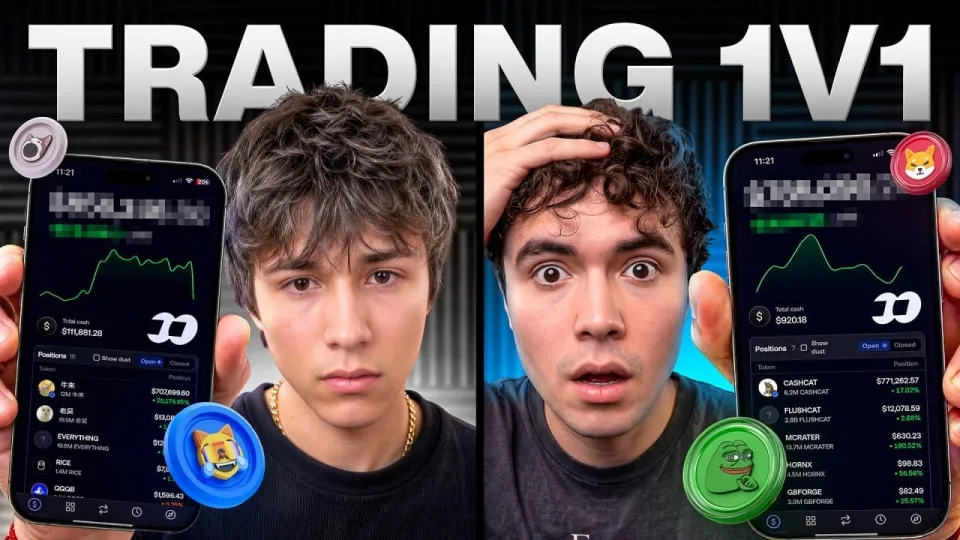
Video: I Challenged A Pro Memecoin Trader (Who Won?)
Want articles like this for your own video to promote it on YouTube and Google? Order them through the Telegram bot @sat_sit_bot. It writes articles around your video, embeds the video and publishes them on popular niche websites (no ads). Try it free: 50 articles on us.
· based on the channel insentos
Key takeaways
- The insentos challenge "I Challenged A Pro Memecoin Trader (Who Won?)" is a live meme coin trading session split into a main trading block and a shorter session with a guest called Grand.
- Execution runs through Axiom (axiom.trade), a trading terminal built for fast Solana memecoin entries and exits.
- The guest trader kept explaining his thought process mid-trade, which viewers repeatedly flagged as the most useful part of the format.
- Viewer reaction was split: many found it the best beginner-friendly meme coin content they had seen, others noted that such sessions often end in losses and resemble gambling.
- A recurring request in the comments was a smaller-capital challenge, such as turning $50 into $1,000, instead of a large-bankroll session.
Meme coin trading is short-horizon speculation on tokens with no cash flow, no product and no fundamental valuation, where the edge comes from speed, liquidity reading and strict risk limits rather than from holding. That is the frame the insentos challenge "I Challenged A Pro Memecoin Trader (Who Won?)" puts on screen: two traders working live markets, narrating decisions in real time, with execution handled through Axiom and the session tracked via the FOMO referral link used in the video. The format matters less than what it exposes — how a professional actually sizes, exits and explains a trade while the chart is still moving.
What the meme coin challenge format actually shows
The value of a live session is that it removes hindsight. In a recorded highlight reel every entry looks obvious; in a live call the trader has to commit before the candle closes, and the audience sees the hesitation, the partial exits and the trades that simply do not work. The insentos video runs a long main trading block followed by a shorter session with a guest named Grand, and the structure is deliberately conversational: the guest keeps asking the host to explain his reasoning even while positions are open, which is exactly the behaviour viewers singled out as the most instructive element.
For anyone learning to trade meme coins, that narration is the deliverable. A profitable screenshot tells you nothing about process; a trader saying out loud why he is taking half off at a certain market cap, or why he is skipping a setup entirely, transfers a reusable rule. The challenge framing — who wins — is the hook, but the education sits in the middle section where advice and execution overlap.
Why Axiom sits at the centre of Solana memecoin execution
Axiom (axiom.trade) is the terminal the session is built around, and its role explains why Solana memecoin trading looks the way it does. Meme coin liquidity on Solana lives in pools that can be created in minutes, so the practical problems are not analysis but latency: finding a contract address, checking that liquidity is actually locked or burned, verifying holder distribution, and getting an order in before the first wave of buyers exhausts the pool. A terminal that bundles charting, wallet tracking and one-click execution compresses those steps into seconds.
The trade-off is real. Speed tools make it easier to enter bad tokens faster. A trader using Axiom still needs a manual checklist before every buy:
- Confirm the contract address from a source you trust, not from a screenshot or a reply.
- Check liquidity size relative to your intended position — if your order moves the price meaningfully, the exit will be worse.
- Look at holder concentration; a handful of wallets holding most of the supply is an exit-liquidity risk, not an opportunity.
- Decide the invalidation point before entering, not after the price drops.
- Pre-set the size so that a total loss is a rounding error in the portfolio, not a setback.
Risk rules that separate a pro from a beginner
The single clearest signal in any live meme coin session is position sizing, because it is the only variable a trader fully controls. Professionals in this niche typically treat each position as expendable capital: the thesis is that most attempts fail and a minority of runners pay for everything. That inverts normal trading psychology, where a losing trade is a mistake — here a losing trade is the expected cost of participating.
Practical rules that follow from that logic:
- Cap any single meme coin position at a small fixed percentage of the trading bankroll, so a rug or a 90% drawdown does not end the session.
- Scale out on the way up rather than trying to sell the top; liquidity on new tokens disappears faster than price does.
- Avoid adding to a losing position. Averaging down on an illiquid token converts a small loss into a total one.
- Keep a written log of entries with the reason for each, because memory rewrites live decisions into something smarter than they were.
- Stop trading after a defined daily loss. Tilt is the most expensive emotion in this market.
What viewers questioned about live trading sessions
The comment thread under the video is a useful map of beginner doubts, and three themes recur. First, several viewers pointed out that sessions like this often end in a loss, which makes the whole exercise look closer to gambling than to trading — a fair observation, since short-horizon meme coin speculation genuinely has more variance than most retail traders expect, and a single session proves nothing about edge.
Second, there is the influence question: trading from an account with an audience is not the same game as trading from an anonymous wallet. Attention moves price on small-cap tokens, so a large following can function as free liquidity. Anyone copying trades from a public figure should assume they are on the slower side of the information flow and size accordingly.
Third, access. Viewers noted that communities and groups are promoted heavily but are often hard to actually join, which is why transparent live formats are valued — you can watch the process without a paywall. The counterweight is that watching is not the same as practising: paper trading or trading tiny size while building a checklist is what converts screen time into skill.
How to use a challenge video as a study tool
A live trading video is most useful when treated as a case study rather than a signal source. Watch it once for the narrative, then again with a notebook: pause before each entry and write down what you would have done, then compare with what the trader did and why. The gap between those two answers is your actual curriculum.
Specific things worth extracting from a session like this one:
- The trader's entry trigger — a specific chart pattern, a holder-count threshold, a volume condition, or simply a narrative catalyst.
- The exit logic — fixed multiples, partials, or a time-based rule when a token stalls.
- The skip list — tokens the trader looked at and rejected, and the reason. Rejections teach more than entries.
- The language used for uncertainty. A pro says "I don't know" about the outcome and still acts on probabilities; beginners wait for certainty and miss every move.
Useful links
- FOMO referral link from the video — registration and bonus access used by the host.
- https://axiom.trade/ — the trading terminal used for Solana memecoin execution.
- https://x.com/insentos — channel updates and trade commentary.
- https://www.instagram.com/insentos — short-form clips.
- https://www.tiktok.com/@insentos — additional video content.
Final takeaway
A live meme coin challenge is entertainment with a genuine educational core, and the insentos session works because the guest keeps explaining decisions while the trade is still open. The transferable lessons are unglamorous: size small, predefine the invalidation point, scale out into liquidity, and treat most trades as the cost of finding the few that run. Anyone expecting a repeatable formula for turning a small bankroll into a large one should note that even experienced traders in these formats frequently finish down, and that public attention is itself an advantage most viewers do not have. If you want to follow the format further, start with the FOMO link from the video and treat every session as practice, not as a promise of profit.
Questions & answers
Is meme coin trading profitable for beginners?
For most beginners it is not, at least not initially. Meme coins have no cash flows, liquidity is thin and variance is extreme, so the realistic first goal is to survive long enough to learn position sizing and exit discipline. Treat early trades as tuition paid at the smallest size you can manage.
What is Axiom and why do Solana meme coin traders use it?
Axiom is a trading terminal at axiom.trade built for fast execution on Solana tokens. It combines charting, wallet and holder data with quick order entry, which matters because memecoin opportunities on Solana can appear and disappear within minutes. Speed cuts both ways: it makes bad entries faster too.
Can you copy trades from a trader with a large following?
You can watch, but copying is risky. A public account can move price on a small-cap token simply through attention, so followers usually enter later and exit later than the trader they are copying. Use such accounts to study process and checklists rather than as a signal service.
What bankroll rules should a meme coin trader follow?
Cap each position at a small fixed share of the bankroll, never add to a losing position, scale out into strength rather than waiting for a top, and set a daily loss limit that ends the session. These rules do not improve your win rate, but they keep a single bad token from ending your trading.
Source: I Challenged A Pro Memecoin Trader (Who Won?) · Markdown version